

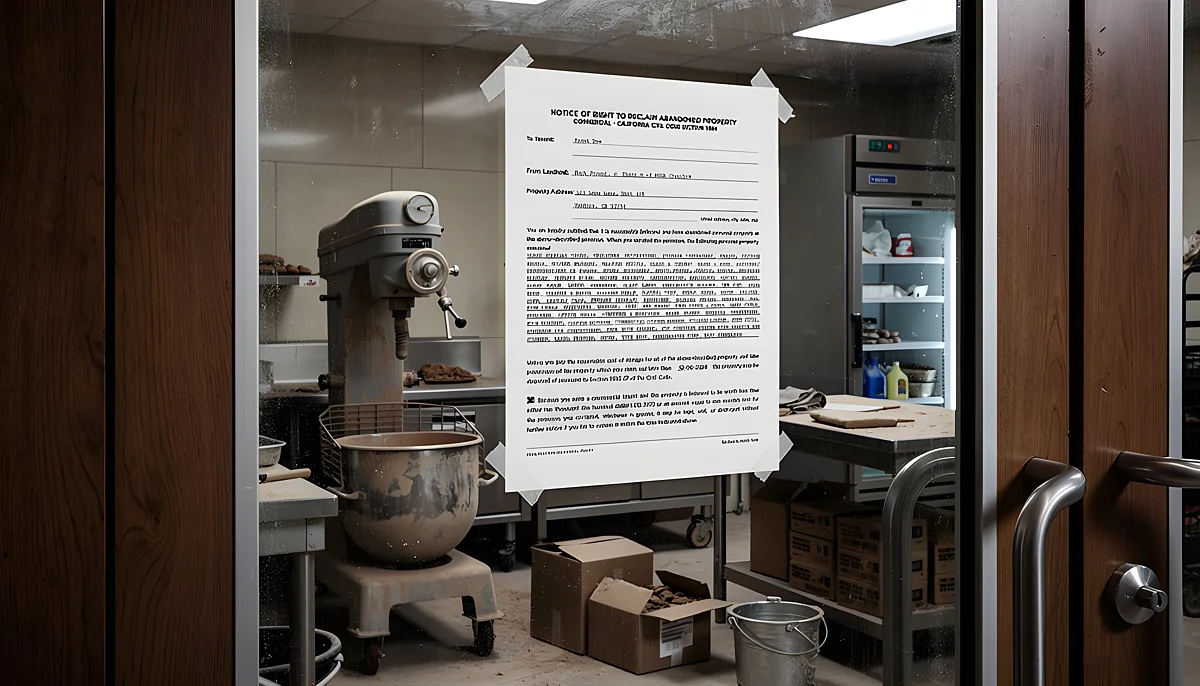
Improperly Served Abandoned Property Notices
Improper service of abandoned property notices is one of the most common compliance failures in California abandoned property matters and one of the primary reasons otherwise valid dispositions are later challenged or invalidated. This applies to all required notices in the statutory process, including the Notice of Belief of Abandonment and the Notice of Right to Reclaim Abandoned Property.
A defective notice does not create a minor technical issue. It prevents the process from legally advancing and removes the statutory basis required to sell or dispose of the property. Under California Civil Code §§1983-1991, the right to dispose of abandoned property depends on proper notice. If notice is defective, the statutory requirements have not been satisfied, and the process does not have the legal authority to proceed.
A defective notice is not a correctable step within an otherwise valid process. It stops the process. The outcome is the same regardless of which required notice was served improperly - the process must be restarted from a compliant position before any lawful disposition can occur.
Common Notice Failures
Tenant Name Mismatch
The name used in a notice should match the tenant name reflected in the lease and tenancy records. This becomes a frequent issue in commercial tenancies where the lease entity, operating business name, and any guarantor differ, creating confusion as to which party is actually entitled to reclaim the property.
A notice that identifies the wrong party, uses an incomplete name, or relies solely on a DBA instead of the lease entity may be challenged as defective. Using the lease name as the anchor point reduces that risk, and adding inclusive language such as “and all other occupants” helps address additional parties without replacing the need for correct tenant identification.
In some cases, identification issues extend beyond the tenant. Where the owner is aware of other parties with a potential claim to the property, particularly in commercial settings involving inventory, equipment, or financed assets, failing to account for those interests can expand the dispute beyond notice alone and increase the likelihood of competing claims after disposition. These issues often intersect with how required notices are structured and who is properly included, particularly in situations addressed in Notice Of Right To Reclaim.
Incorrect Mailing Address
Mailing address errors are another common reason notice service is challenged. In most cases, required notices must be mailed to the tenant's last known address and, where applicable, also to the address where the property was left. Using the wrong address, omitting a required address, or relying on an address that cannot be tied back to the tenant's own records can undermine the defensibility of service because the issue becomes whether notice was sent in a manner consistent with statutory expectations.
The "last known address" does not require the property owner to locate new or alternative addresses beyond what the tenant has provided. Reliance on addresses contained in the lease, application, or prior correspondence is generally sufficient, while attempting to identify additional or speculative addresses can introduce inconsistency and create additional exposure if notice is sent unevenly or without a clear basis.
Mailing a copy of notice to the property address serves a separate function. Even after possession has been regained, that address may still be subject to active mail forwarding through the postal system, creating an additional path for delivery. Including the property address helps demonstrate that notice was sent using all known, tenant-associated locations rather than relying on a single point of delivery. For a broader breakdown of mailing considerations, see Notice Mailing Checklist.
Proceeding After Defective Notice
Proceeding with action after defective notice is not a discretionary risk decision. It is a failure to meet a required legal condition, and the process does not have the authority to move forward. Under California Civil Code §1988, the ability to dispose of property is tied to proper notice and expiration of the applicable reclaim period. If notice is defective, that condition has not been met.
A properly conducted disposition does not correct or override defective notice, because the issue is not how the outcome was achieved, but whether the right to proceed ever existed. Where action is taken despite defective notice, the result may be challenged regardless of outcome, timing, or execution. This is one of the most common failure points in abandoned property matters.
Correcting Defective Notice
When a notice defect is identified, the process must return to a legally compliant position before any further action is taken. The timeline that governs abandonment and disposition is tied directly to proper service, so a defective notice interrupts that timeline and prevents it from continuing forward in a valid manner.
Correction requires re-serving notice in a manner that aligns with statutory requirements and allowing the full notice period to run from that corrected service. This resets the legal foundation for the process and ensures that any later disposition is supported by a properly established right to proceed.
Where Notice Errors Occur
Notice defects most often arise after possession has been regained and before disposition is scheduled. They are commonly tied to rushed preparation, incomplete tenant records, or confusion between multiple entities in commercial tenancies where names, roles, and responsibilities are not clearly aligned.
Errors at this stage affect every downstream step, including valuation, publication timing, scheduling, and overall defensibility. Once the process moves forward on a defective notice, the entire disposition becomes vulnerable to challenge, even if every subsequent step is handled correctly.
Other States Considerations
In Nevada, abandoned property notice requirements are governed under NRS 118A.460, which requires that tenants be given proper notice and an opportunity to reclaim property before disposition. Defective service can prevent lawful disposition, even where the property appears clearly abandoned.
In Arizona, ARS §33-1370 governs abandoned property following termination of tenancy and similarly ties the right to dispose of property to proper notice. Errors in tenant identification or mailing can create disputes over whether the statutory process was satisfied before disposition occurred.
Across jurisdictions, the same principle applies - the legal right to dispose of abandoned property is created through proper notice, not through the apparent facts of abandonment.
Relevant Statutory Framework
- California Civil Code §§1983-1991
- California Civil Code §1984
- California Civil Code §1988
- Nevada Revised Statutes §118A.460
- Arizona Revised Statutes §33-1370
Disclaimer: The information provided on this page is for general informational purposes only and does not constitute legal advice. Laws governing abandoned personal property and auction requirements vary by jurisdiction and specific circumstances. Property owners and managers should consult qualified legal counsel before taking action.
Request Services
Please complete the form and a rep will reach out to you shortly
* If you would like to upload files (such as your eviction paperwork or images of the abandoned property), you can switch to our long form here.