

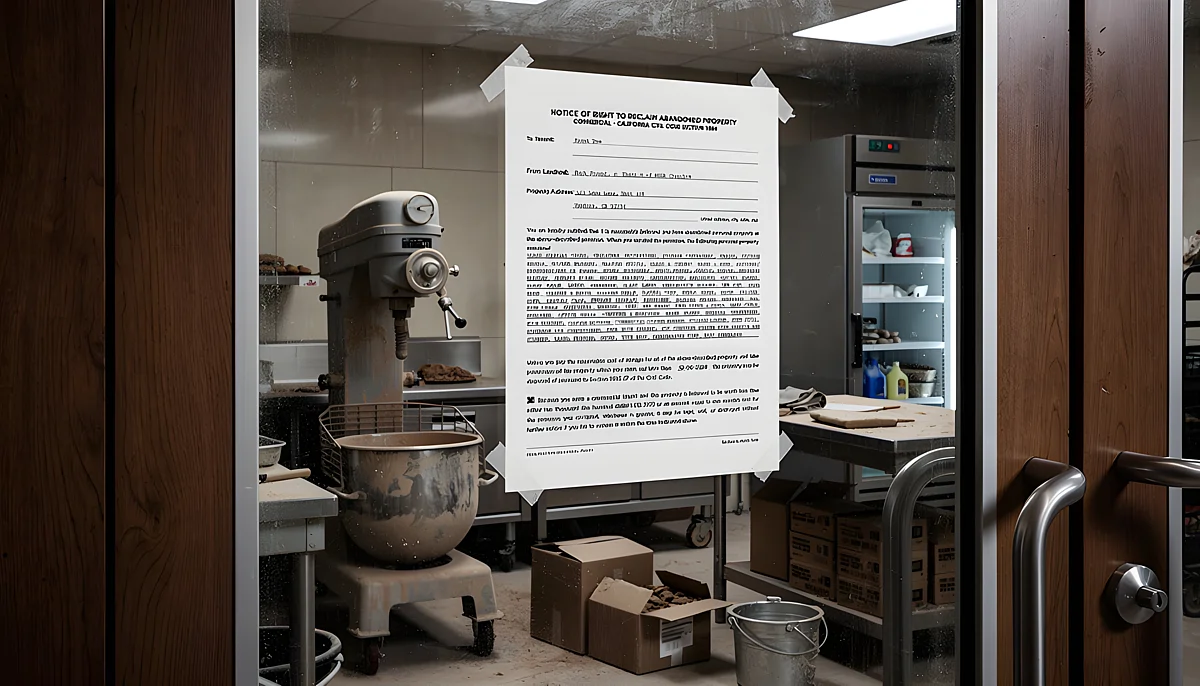
Abandoned Property Notice Of Right To Reclaim
A Notice of Right to Reclaim is the notice that follows once property has been left behind after a tenancy ends and the process is ready to move forward.
Under California Civil Code §§1983-1991, property cannot be sold, discarded, or otherwise disposed of until this notice has been properly served and the required reclaim period has expired. Until that time, the property must be held and made available for recovery.
This notice does not determine whether property is abandoned. It establishes the timeframe during which the former tenant has the right to reclaim belongings before disposition becomes available.
When This Notice Applies
This notice is typically used after possession has been restored, including following eviction, or after abandonment has already been established through the appropriate process.
At this stage, the question is no longer whether the property is abandoned. The focus shifts to providing the former tenant with a defined opportunity to recover their belongings before further action can be taken.
Where abandonment has not yet been established, a different notice may be required. A complete explanation appears in Notice Of Belief Of Abandonment.
What The Notice Accomplishes
The Notice of Right to Reclaim serves a specific function within the statutory framework.
It provides the former tenant with clear instructions on how to recover their property, establishes a defined deadline for doing so, and sets the earliest point at which the property may be removed, sold, or discarded if it is not claimed.
Under California Civil Code §1983, the notice must include required information and provide a defined reclaim period, which varies depending on how the notice is delivered.
This is the step that creates the timeline for everything that follows. A complete explanation of how that timeline unfolds appears in Abandoned Property Process Timeline.
Why The Property Description In The Notice Matters
The way property is described in the Notice of Right to Reclaim plays an important role in how the process is later evaluated.
Under California Civil Code §1983, the notice is required to reasonably describe the property left behind. In practice, this description does more than inform the former tenant. It helps establish a record of what was present at the time the notice was issued.
When the property is clearly identified and documented, it becomes easier to demonstrate what was made available for recovery and how the process was handled. This can be particularly important if questions arise later about missing items, condition, or whether specific property was included.
By contrast, vague or incomplete descriptions can create ambiguity, especially where disputes develop after the property has been removed, sold, or discarded..
Because of this, the level of detail used in the notice often has a direct impact on how defensible the process is if it is later challenged.
A complete explanation of how property is identified and documented appears in Abandoned Property Valuations, including how inventory and appraisal practices support this step.
What Happens During The Reclaim Period
During the reclaim period, the former tenant retains the right to recover their belongings.
Property must be made available for retrieval, and in many cases, reasonable storage or related costs may be required to be paid before release. These interactions should be handled carefully and documented, particularly where access, timing, or condition of the property is disputed.
No disposal or sale can occur during this period, even if the property appears to have little value or the tenant has not communicated.
What Happens If The Property Is Not Reclaimed
If the reclaim period expires without the property being recovered, the process may move forward to disposition.
At that point, the next step is determined by value. Under California Civil Code §1988, property below the applicable threshold may be disposed of, while property exceeding that threshold must be sold through a public process.
A complete explanation of how value affects this decision appears in Abandoned Property Value Thresholds.
Common Mistakes With This Notice
One common issue is treating the reclaim period as flexible or shortening it based on assumptions about the tenant's intent. The full statutory period must be provided before further action can be taken.
Another frequent mistake is incomplete or incorrect notice content. Missing or inaccurate information can affect whether the notice is valid, which in turn can impact whether the property was lawfully handled.
There is also a tendency to move too quickly once the period expires, without properly documenting the transition to valuation and disposition.
Where This Fits In The Process
The Notice of Right to Reclaim sits between abandonment and disposition.
Once abandonment has been established, this notice creates the final opportunity for recovery before the property is either discarded or sold. Only after this step has been completed can the process move forward with confidence.
A complete explanation of how abandonment is established appears in Abandoned Property Legal Abandonment.
How Reclaim Notices Protect The Process
This notice should be treated as a compliance step rather than a formality.
Accuracy in content, proper delivery, and clear documentation all play a role in whether the process can be defended later. Even minor errors can become significant if the handling of the property is questioned.
Where notice timing, documentation, or coordination needs to be handled carefully, many property owners rely on experienced professionals to manage the process from start to finish. A complete overview of how this is handled in practice appears in Abandoned Property Auctioneer Services.
Other States Considerations
In Nevada, notice requirements for abandoned property are addressed under Nevada Revised Statutes §118A.460, which establishes reclaim periods and conditions for disposition.
In Arizona, Arizona Revised Statutes §33-1370 outlines notice requirements and timelines governing how long property must be held before it may be disposed of or sold.
While the role of notice is consistent, the specific requirements and timing vary by jurisdiction.
Relevant Statutory Framework
- California Civil Code §§1983-1991
- California Civil Code §1983
- California Civil Code §1988
- Nevada Revised Statutes §118A.460
- Arizona Revised Statutes §33-1370
Disclaimer: The information provided on this page is for general informational purposes only and does not constitute legal advice. Laws governing abandoned personal property and auction requirements vary by jurisdiction and specific circumstances. Property owners and managers should consult qualified legal counsel before taking action.